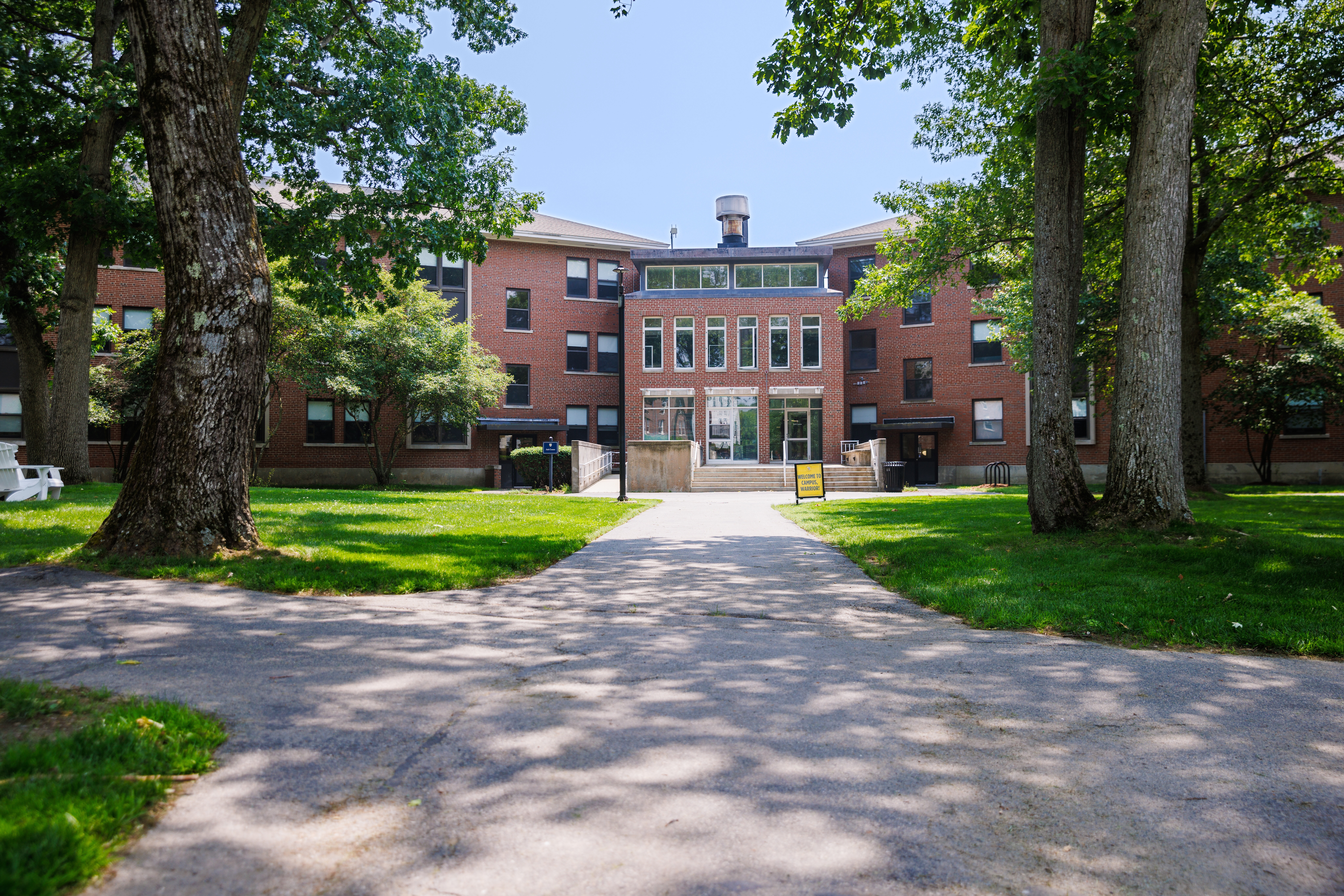
Congratulations on your admission to Merrimack! The Office of Residence Life is thrilled to welcome you to the Merrimack community.
Planning to live on campus? Make sure you fill out the Mid-Year Housing Interest Form! This quick form helps the Office of Residence Life learn about your lifestyle and preferences so we can pair you with a roommate who’s a great fit for you.
If you already have a friend you’d like to live with, you may request each other as roommates directly on the form. Please note that all requests must be mutual for us to be able to accommodate them.
New students are able to request housing accommodations based on their medical, psychological and/or disability needs. More information can be found on the Accessibility Services website.
Living with others can be both a challenging and rewarding experience in college. The Office of Residence Life is available to assist you as you navigate community life. If a roommate conflict does occur, please contact your Resident Advisor (RA). RAs are here to help mediate a conversation between you and your roommates and create a roommate agreement.
A roommate agreement can help you and your roommates set common goals and guidelines for your room. It typically covers a variety of issues like guests, noise, sharing food, clothes and more. Your RA can help you develop this agreement. It is important to follow these guidelines and revisit the contract periodically.
To build a successful roommate relationship, you need to keep the lines of communication open by talking and listening.
It is important to start off on the right foot with your new roommate. Even if your roommate is not new to you, you are still new to being roommates and living with him or her will show you things that you never knew about your friend.
You should begin by addressing potential problem areas and getting them out in the open so that there will be fewer surprises down the road. Take some time to talk about habits and preferences.
Most roommate conflicts are the result of miscommunication or, in some cases, a lack of communication. If you can communicate effectively, it will be much easier to develop a comfortable living environment for you and your roommate.
Talk to your roommate directly when something is bothering you. Don’t discuss it behind his or her back; this can cause a breakdown in trust between the two of you.
Be direct. Be clear about what is bothering you. If you don’t tell your roommate that there is a problem, he or she won’t be able to do anything about it.
If you create a win-win situation, then the conflict is more likely to be resolved. Evaluate the needs of both sides before a solution is proposed. And make sure the solution is acceptable to both parties.
Respect each other’s differences. Everyone has different values, lifestyles, expectations and communication styles. Get to know each other and establish common ground. It is easier to solve a problem with a friend than a stranger.
When living with another person, especially for the first time, space can become an issue. Therefore, it is important that all roommates have equal space in the room and speak openly about their concerns.
When discussing space issues, it is also important to discuss cleaning and shared spaces (such as a suite common area or bathroom). Discuss what an acceptable level of cleanliness is. Then develop a cleaning schedule and stick to it. If you believe that one roommate is not sticking to the agreed upon plan, then talk about the situation with them. If you need assistance to do this, see your resident advisor.
Our policy is to charge all students who are responsible for avoidable damage and losses that occur in the residence areas. Avoidable damage is defined as damage that is the consequence of careless, willful or malicious actions, including the consequences of horseplay and indoor sports. When individual responsibility for damage and loss in public areas cannot be determined, a charge will be made to all students within a reasonably defined area. Common area damage assessments cannot be appealed.
Each student will receive one set of furniture in a standard occupancy room. A full set includes a twin XL bed (W36″ x L80″), 3- drawer dresser (W32″ x L19″ x H30″) , desk with pencil drawer (W36″ x L24″ x H30″) and a two drawer, one door wardrobe (W32″x L25″ x H72″). Sit down with your roommates to develop a plan to share the furniture and space in your room equally.
Merrimack College is not responsible for personal items that are damaged or stolen while living in the residence halls. You are strongly encouraged to purchase insurance for your belongings. Such insurance can be obtained through National Student Services insurance.
You will be provided with a bed frame, twin XL mattress, desk, desk chair, dresser and wardrobe. This furniture must remain in your assigned room for the duration of the year. If you wish to bring additional furniture, it must meet the safety specifications required. You are not permitted to bring or construct your own beds or raise the bed provided by the college. Any upholstered furniture must meet California Fire Code 117 or higher. All upholstered furniture must also have a tag indicating the fire code rating.
Certain items including, but not limited to, nails, duct tape, double-sided tape, poster gum and thumbtacks may damage the walls. These damages are billed to the room occupants at the end of the year. We recommend you pack a few rolls of blue painter’s tape to prevent damage to the walls if you hang posters and decorations. We prohibit decorations on the ceiling.
Merrimack College is a wireless campus. Access to Wi-Fi is provided in the residential areas. Personal Wi-Fi devices are prohibited. In addition, technology with wireless capabilities including, but not limited to, printers, gaming devices, and Apple TVs must be plugged into an ethernet port with the wireless function turned off.
IF you have additional questions, please see the Merrimack College IT department’s list of Frequently Asked Questions.
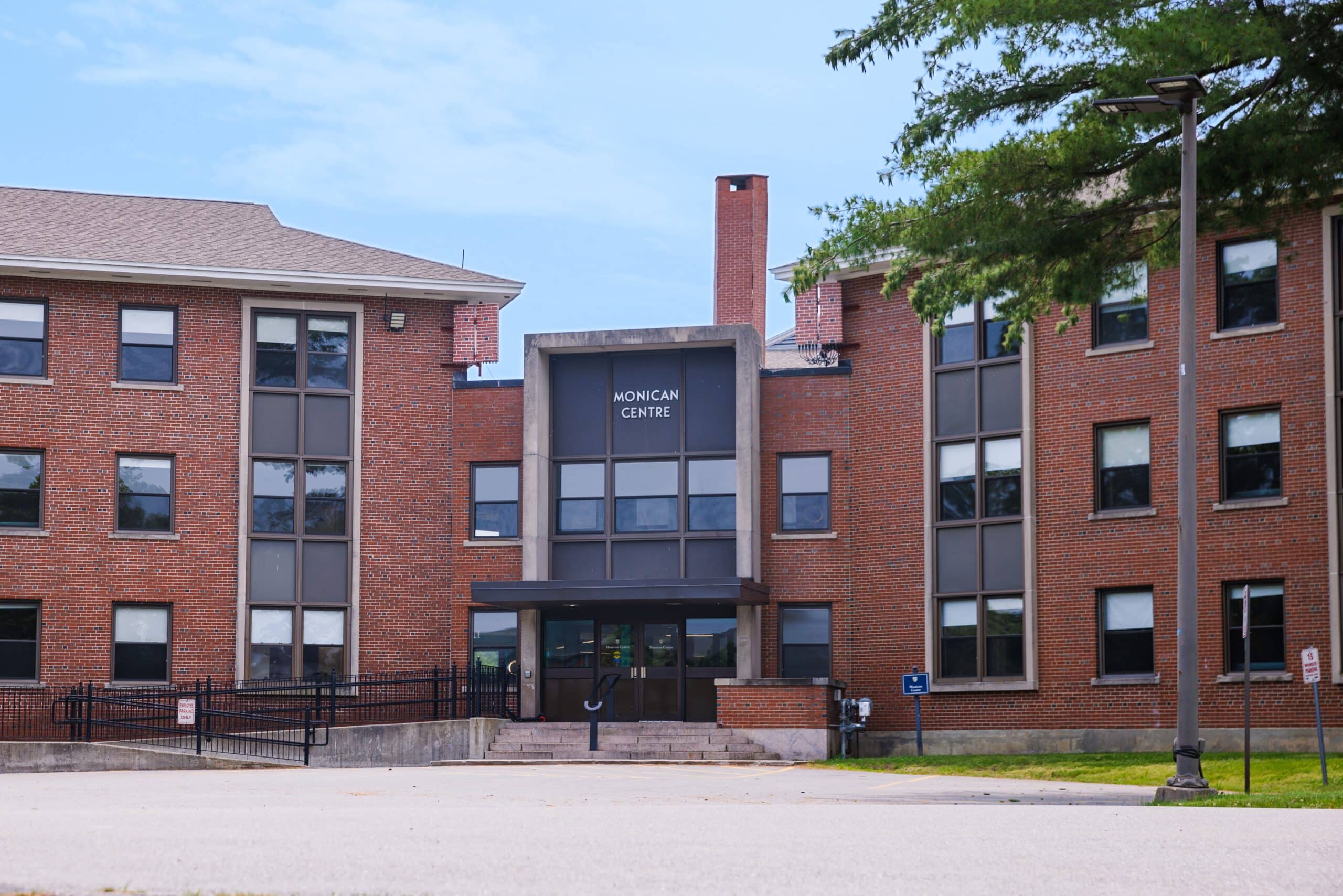
If you live in the doubles, triples and quads in Ash, Deegan and Monican, you may have one microwave. Output can be no more than 700 watts, and input can be no more than 1200 watts.
If you live in the suites in Ash, Monican, North and South Residential Villages, in apartments or in Townhouses, you may have one microwave. Output can be no more than 700 watts, and input can be no more than 1200 watts. It must be stored and used in a common area.
All microwaves must be plugged into a surge protector. Violations of this policy will result in the confiscation of all microwaves present in the space. Students may choose to purchase their own microwave or rent a combination microwave/refrigerator unit through New England Student Services.
All refrigerators must be less than 5 cubic feet.
Each student is permitted to have their own refrigerator. Students may choose to purchase their own refrigerator or rent a combination microwave/refrigerator unit through New England Student Services.
Once everyone has requested or accepted a request from each member of the group, they will be considered “fully matched.” If not everyone matches with each other, the group will not be considered fully matched, and each individual will go through the process as a group of one. Residence Life will reach out to you if this is not completed.
Your first year at Merrimack is the start of an exciting journey, and where you live plays a big role in that experience. Our first-year housing options are designed to help you feel comfortable, supported and connected from the very beginning.
Yes, students will be charged the rate that corresponds with their room type. Meal plans are different rates based on the selected plan. All first-year students are required to carry the “19 Meals Per Week – All Access Plan” during their first year. Transfer and returning students will be able to make changes to their meal plan during the first week of classes. Information regarding meal plan changes will be sent to students Merrimack email address, when the change period has begun. You may also learn more on our dining page. For questions regarding your bill, please contact the Student Financial Services and Registrar.
Questions regarding room type can be directed to [email protected] or 978-837-5507.
Questions regarding room type can be directed to [email protected] or 978-837-550.
Please contact the Office of Residence Life at [email protected] or 978-837-5507.
To be eligible to live in college-provided housing, all residential students must sign the residency agreement, which outlines conditions for living on campus.
Your Name
Merrimack College
MAIL STOP Number
315 Turnpike St.
North Andover, MA 01845
Be advised that we use the words “mail stop” only, as “box” and “number” confuse UPS and FedEx deliveries.
To find your mail stop number, please contact the Post Office at [email protected].
Any questions for any of the students can be sent to [email protected].
We encourage you to contact the Office of Residence Life at 978-837-5507 or [email protected]. We are here to help answer any question you may have about housing at Merrimack.