In 2015, Nepal suffered a devastating earthquake that left tens of thousands dead or injured. Since then, engineers from around the world have been working to strengthen the nation’s buildings in an effort to prevent similar destruction in the future.
Merrimack College Professor Marc Veletzos is one of those engineers. Over the past 10 years, he has used his expertise in a variety of projects designed to strengthen the nation’s infrastructure.
“It felt like something I could do that aligns with Merrimack’s mission,” he said. “Working in Nepal is the way I feel I can have the most impact. There are already many people here studying how our buildings can withstand an earthquake. But there are 10 million people in Nepal who are vulnerable to building collapse.”
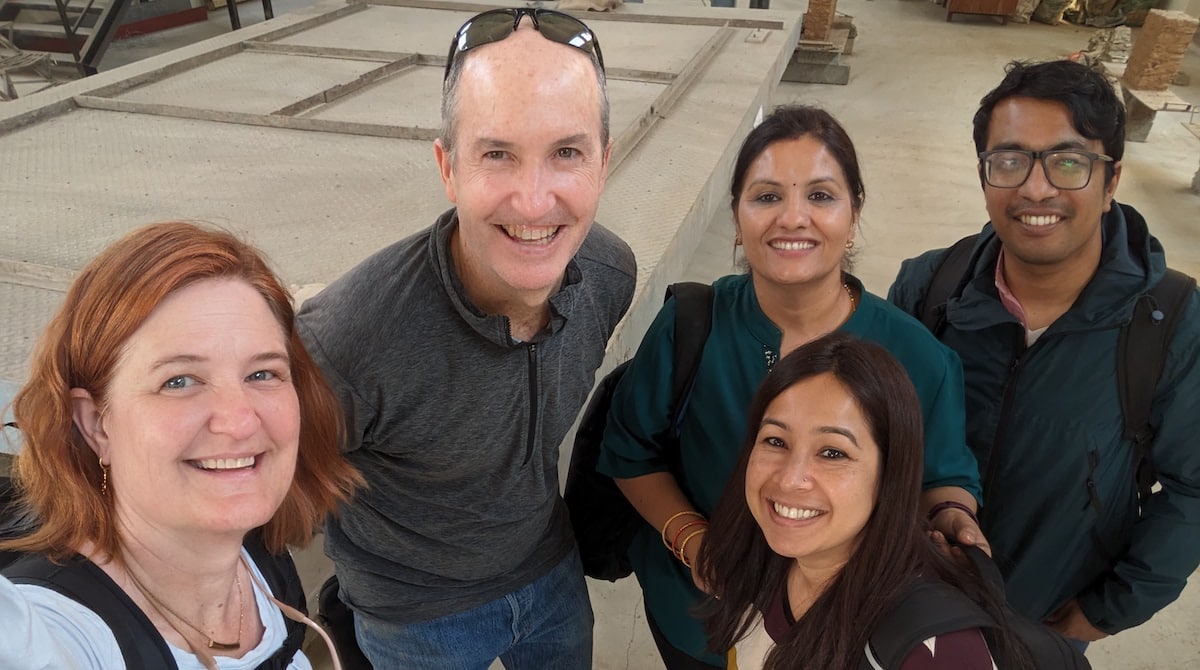
Last year, Veletzos conducted a study on earthquake-resistant desks for Nepalese schools that have yet to be reinforced.
“GeoHazards International and team leader, Heidi Stenner, designed desks to give children a safe place in case of an earthquake,” he said. “They brought me onto their project as the testing expert to help prove to the stakeholders that these desks can withstand the demands of a building collapsing on them.”
Veletzos conducted a number of tests, including putting the desks under a press to demonstrate how much weight they can support. Then, his team made a stone schoolhouse on top of a shock table, used to simulate earthquakes, and filled it with earthquake-resistant desks.
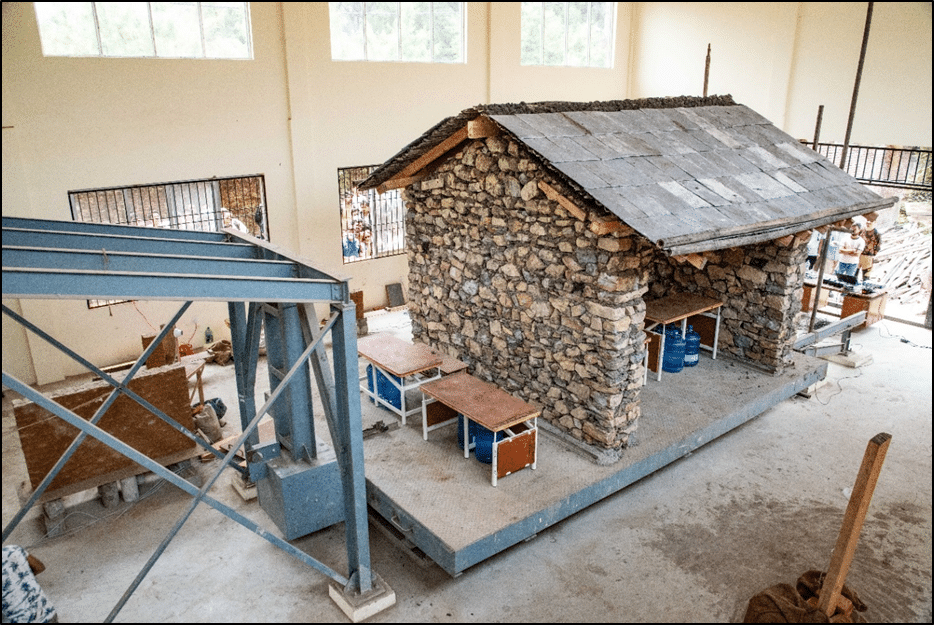
“The main goal was to have one big pulse to collapse the structure in one go,” Veletzos explained. “It turned out amazing. There was only superficial damage on the desks.”
Veletzos will discuss his study as the School of Engineering and Computational Sciences representative at the McQuade Library’s annual Tolle Lege event. The Tolle Lege collection catalogs published works by Merrimack students, faculty and staff. In 2025, 108 Warriors published 204 pieces.
“It is a neat event,” he said. “It is fun to see what other people are working on. We have a lot of high-caliber people doing impactful work and it is great to be a part of it. I think Merrimack’s heading in the right direction with supporting research.”
Veletzos hopes to extend his research with the mock schoolhouse. The test was captured by digital sensors to determine how the building fared on the shock table. Veletzos hopes to use this data to create simulations for further fortification research and experimentation.
“I have a student creating a computer model to characterize the data,” he said. “Once you have a computer model, you can test it with anything. Right now, I’m searching for funding to continue this type of work. I’m currently part of the START program, which has certainly given me the time to dig into it more.”